Soap Making Machine Manufacturer in India
Everything you need to know about soap making machines — types, working process, price comparison, buyer checklist, and top manufacturers worldwide. Whether you’re a startup or an industrial producer, this guide covers it all.
Since 2016
- 01 What is a Soap Making Machine?
- 02 Types of Soap Making Machines
- 03 How Does a Soap Making Machine Work?
- 04 Key Components Explained
- 05 Bar Soap vs Liquid Soap Machine
- 06 Price Guide & Cost Breakdown
- 07 How to Choose the Right Machine
- 08 For Small Business & Startups
- 09 Industrial Soap Production Line
- 10 Top Manufacturers & Suppliers
- 11 ROI Calculator & Profit Analysis
- 12 FAQ — People Also Ask
What is a Soap Making Machine?
A soap making machine (also called a soap manufacturing machine or soap production machine) covers any equipment that automates one or more stages of soap production — from raw material mixing and heating, to refining, molding, cutting, stamping, and packaging.
Modern soap making machines range from compact bench top units for home-based businesses producing 50 kg/day, all the way to fully-integrated industrial soap manufacturing plants producing thousands of kilograms per hour. The type of machine you need depends on your product type, output target, budget, and automation level.
The global soap equipment market is projected to reach USD 79.38 billion by 2033. Driven by rising demand for organic soap, natural soap, and liquid detergent, manufacturers worldwide are upgrading from manual to automated soap production — making the right machine selection more important than ever.
Soap Making Machine vs Manual Production
- Consistent bar size, shape, and quality every batch
- 5–10x higher output than manual methods
- Lower long-term labor costs
- Suitable for commercial and export-grade production
- Runs 24 hours continuously (fully automatic models)
- PLC control ensures precision and safety
- Inconsistent bar size and weight
- Very low output volume
- High labor costs at scale
- Not suitable for commercial retail or export
- Quality depends on worker skill
- High waste rate of raw materials
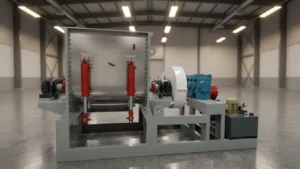
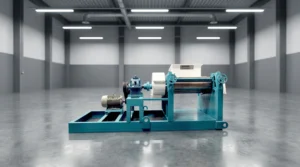
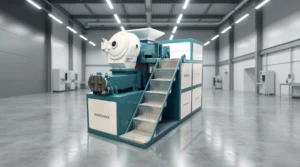
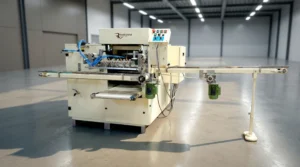
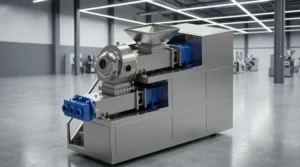
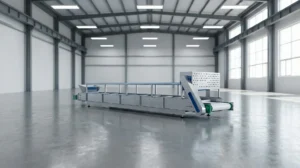
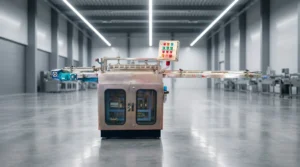
Types of Soap Making Machines
The soap making machine category covers a wide range of equipment. Understanding the different types is the first step to making the right investment decision.
By Product Type
Used for toilet soap, laundry soap, bathing soap, detergent bars, and dishwash bars.
- Toilet soap manufacturing machine
- Laundry soap making machine
- Detergent soap making machine
- Dishwash bar making machine
- Medicated bar soap machine
- Luxury/glycerin soap machine
Used for hand wash, shampoo, dishwashing liquid, body wash, and liquid detergent.
- Liquid detergent making machine
- Hand wash making machine
- Dishwashing liquid making machine
- Liquid soap mixer machine
- Shampoo manufacturing machine
- Soap filling and packaging machine
By Automation Level
Completely automated from mixing to packaging. PLC-controlled with minimal human intervention. Best for large-scale commercial production.
- Output: 500 kg/hr to 5,000+ kg/hr
- PLC + IoT integration available
- Runs 24 hours continuously
- Automated cutting, stamping, wrapping
- Ideal for: industrial producers, exporters
Machine handles mixing/heating; operators manage loading and some finishing steps. Best for small to medium businesses.
- Output: 50 kg/hr to 500 kg/hr
- Lower upfront investment
- Easier to maintain and operate
- Flexible for multiple soap formulas
- Ideal for: startups, small manufacturers
By Production Scale
How Does a Soap Making Machine Work?
Understanding the soap making machine working process helps you evaluate what equipment you need and where to invest. Here is a complete step-by-step walkthrough of the industrial soap manufacturing process:
Raw Material Mixing
Fats, oils, alkali (NaOH for bar soap, KOH for liquid soap), fragrance, colorants, and additives are loaded into a soap mixer machine or reactor. Automated PLC systems control mixing ratios, temperature, and speed to ensure consistency.
Saponification & Cooking
The soap base undergoes saponification (chemical reaction that turns fats into soap). For bar soap, this produces a soap mass. For liquid soap, the soap kettle or reactor produces a liquid concentrate. Heating systems maintain stable temperature throughout.
Refining — Triple Roller Mill
The soap mass passes through a triple roller mill, which grinds and homogenizes the soap to a smooth, even texture. This step improves lather quality and removes any undissolved particles. Critical for high-quality toilet soap and laundry soap bars.
Plodding / Extrusion — Vacuum Plodder
The refined soap passes through a vacuum plodder machine (also called a duplex worm vacuum plodder), which removes air bubbles, compresses, and extrudes the soap into a continuous log or bar shape. This ensures consistent density and smooth surface finish.
Cutting — Soap Bar Cutting Machine
The extruded soap log passes through an automated soap bar cutting machine, which cuts it into bars of precise, pre-set dimensions. PLC-controlled cutters ensure every bar is uniform in weight and length — critical for retail-grade output.
Stamping & Embossing — Soap Stamping Machine
Each soap bar is pressed through a soap stamping machine that imprints the brand logo, product name, or decorative pattern onto the bar surface. Produces clear, sharp impressions. Speed: up to 60–120 bars per minute depending on model.
Packaging — Soap Filling & Packaging Line
Finished bars are transferred to the soap packaging machine or wrapping line. For liquid soap, the soap filling machine accurately doses product into bottles, pouches, or containers. Labeling machines apply product labels and barcodes automatically.
Liquid soap manufacturing follows a different path: raw materials enter a high-shear vacuum homogenizing mixer that blends, heats, and homogenizes ingredients into a stable liquid formula. The homogenizer uses vacuum technology and high-speed blades to prevent bubbles and ensure uniform viscosity. The finished liquid then goes through a soap filling machine for accurate dosing into packaging.
Key Components of a Soap Making Machine
A complete soap production line is made up of multiple interconnected machines, each handling a specific stage of the soap manufacturing process. Here are the essential components:
Bar Soap Making Machine vs Liquid Soap Making Machine
Choosing between a bar soap making machine and a liquid soap making machine is one of the most fundamental decisions. Here is a side-by-side comparison to help you decide:
| Feature | Bar Soap Making Machine | Liquid Soap Making Machine |
|---|---|---|
| Products Made | Toilet soap, laundry bar, detergent bar, dishwash bar | Hand wash, shampoo, dishwashing liquid, liquid detergent, body wash |
| Key Equipment | Mixer, roller mill, plodder, cutter, stamper | Reactor/kettle, high-shear homogenizer, filling machine |
| Alkali Used | NaOH (Sodium Hydroxide) | KOH (Potassium Hydroxide) |
| Market Demand (2026) | Stable — bar soap market USD 3.12B globally | High growth — liquid soap market growing at 8%+ CAGR in Asia |
| Entry Cost | Medium–High (mixer + roller + plodder + cutter) | Lower entry — single reactor + filling machine |
| Packaging | Wrapping machine, carton packing | Bottle filling machine, capping machine, labeler |
| Scalability | High — modular production line | Very High — reactor size scales easily |
| Best For | Established soap brands, laundry/toilet soap manufacturers | Personal care startups, liquid detergent, emerging brands |
Liquid soap and hand wash demand surged post-pandemic and shows no signs of slowing. Asia-Pacific — especially India and China — is recording liquid soap equipment adoption rates of 8.3%–8.6% CAGR. If you are targeting a new market or personal care segment, a liquid soap making machine offers a lower barrier to entry and faster return on investment.
Soap Making Machine Price Guide (2026)
Soap making machine price varies widely based on type, automation level, capacity, and country of manufacture. Below is a comprehensive price guide to help you budget correctly.
Soap Making Machine Price in India (INR)
| Machine Type | Capacity | Approx. Price (INR) | Best For |
|---|---|---|---|
| Mini / Home Soap Machine | 20–50 kg/day | Get Price request | Home-based, micro-business |
| Semi-Automatic Bar Soap Line | 100–300 kg/day | Get Price request | Small manufacturers, startups |
| Semi-Auto Liquid Soap Machine | 200–500 L/day | Get Price request | Hand wash, liquid detergent startups |
| Automatic Bar Soap Production Line | 500–2000 kg/day | Get Price request | Mid-scale manufacturers |
| Industrial Soap Manufacturing Plant | 2000+ kg/day | Get Price request | Large-scale producers, exporters |
Soap Making Machine Price — Global (USD)
| Machine Type | Capacity | Price Range (USD) | Country |
|---|---|---|---|
| Semi-Auto Liquid Soap Machine | Small batch | Get Price request | India / China |
| Liquid Soap Mixer + Filling Line (SME) | 500–2000 L/day | Get Price request | India |
| Automatic Bar Soap Line | 500–2000 kg/day | Get Price request | China / India |
| Full Industrial Soap Production Line | 2000+ kg/day | Get Price request | China / Europe |
| Turnkey Soap Manufacturing Plant | Custom | Get Price request | China / Germany / Italy |
When budgeting for a soap making machine, go beyond the machine price. Include: raw material costs, building/space, electrical setup, water supply, packaging materials, quality testing equipment, operator training, and working capital for first 3 months of production. A ₹5 lakh machine can require ₹8–12 lakh total setup investment.
How to Choose the Right Soap Making Machine
Choosing the wrong soap making machine is one of the most costly mistakes a soap manufacturer can make. Use this buyer's framework to make the right decision:
Step 1 — Define Your Product
What type of soap will you make? Bar soap (toilet, laundry, detergent) or liquid soap (hand wash, dishwashing liquid, liquid detergent)? This determines the entire equipment configuration.
Step 2 — Set Your Target Capacity
How many kilograms per day do you need to produce? Start with your realistic 12-month sales target, not your dream capacity. Buying a machine that exceeds your actual sales will hurt cash flow.
Step 3 — Choose Automation Level
Fully automatic soap making machines deliver consistent output with minimal labor — but cost significantly more upfront. Semi-automatic machines are affordable, flexible, and ideal for startups. Choose based on your labor costs and production volume.
Step 4 — Evaluate Manufacturer Support
- Does the manufacturer offer installation support and operator training?
- Are spare parts easily available in your country?
- What is the warranty period? (Standard: 1 year)
- Does the manufacturer have export experience?
- Can they provide a free sample test run?
- Do they offer customization for specific soap formulas?
- What is their average customer review / industry reputation?
Step 5 — Calculate ROI Before You Buy
Calculate your payback period: divide the machine cost by your estimated monthly net profit from soap sales. A well-matched machine should pay back within 18–36 months. If your payback period exceeds 4 years, reconsider the capacity or model.
Soap Making Machine for Small Business & Startups
Starting a soap manufacturing business with limited capital? Here is exactly what you need.
Bar Soap: Soap mixer + triple roller mill + manual plodder + soap cutter + soap stamping machine. Budget: ₹3–7 lakh.
Liquid Soap: Reactor / mixing tank + high-shear mixer + filling machine + capping machine. Budget: ₹1.5–4 lakh.
Best Machines for Small Soap Business
Profitability Analysis — Small Soap Business
| Item | Bar Soap (Daily) | Liquid Soap (Daily) |
|---|---|---|
| Production capacity | 100 kg/day | 200 L/day |
| Raw material cost | ₹40/kg avg | ₹25/L avg |
| Selling price | ₹80–120/kg | ₹60–100/L |
| Daily revenue (estimated) | ₹8,000 – ₹12,000 | ₹12,000 – ₹20,000 |
| Monthly profit (net, after costs) | ₹50,000 – ₹80,000 | ₹80,000 – ₹1,50,000 |
*Estimates vary by region, product quality, and market. Conduct local market research before investing.
Industrial Soap Production Line & Manufacturing Plant
For mid-to-large scale soap manufacturers, a complete industrial soap production line is the standard — integrating every stage from raw material input to finished, packaged product.
What a Fully Automatic Soap Production Line Includes
Soap Making & Mixing Section
Industrial-grade mixers, reactors, and kettles. Capacity: 500 kg to 5,000+ kg per hour. Stainless steel construction. Automated PLC-controlled dosing of all ingredients.
Refining Section — Triple Roller Mill
Multiple triple roller mills in series for finest-grade soap refining. Produces smooth, high-lather soap base suitable for premium toilet soap and export-grade bars.
Duplex Vacuum Plodder Line
High-capacity duplex worm vacuum plodders (extruders) that process soap continuously. Output: 500–3,000 kg/hr depending on model. Air-free, dense bar with consistent density.
Automatic Cutting & Stamping Line
High-speed automated soap bar cutting machine followed by stamping machine. PLC-controlled for precise dimensions. Speed: 60–150 bars per minute. Handles all bar sizes.
Filling & Packaging Line
Integrated high-speed soap filling and packaging line for wrapping, carton packing, and boxing. Includes conveyor systems, labeling machines, and quality control checkpoints.
Modern industrial soap manufacturing plants now integrate IoT-enabled control systems that monitor mixing ratios, temperature, and line speed in real time. AI-assisted quality control detects defects automatically. Predictive maintenance modules reduce unplanned downtime by 20–35%. If you are investing in an industrial soap production line in 2026, ensure your supplier offers PLC + IoT integration as standard.
Top Soap Making Machine Manufacturers & Suppliers
When choosing a soap making machine manufacturer, consider technical capability, export experience, after-sales support, spare parts availability, and pricing. Here is an overview of major sourcing regions:
| Country | Strength | Price Range | Best For |
|---|---|---|---|
| India Delhi, Ahmedabad, Mumbai | Affordable, strong after-sales support, customizable formulas, understands local market | Low–Medium | South Asia, Africa, Middle East markets. Best for startups and mid-scale producers. |
| China Tianjin, Guangzhou, Shanghai | Large production capacity, most machine types available, 20+ years export experience | Medium | Large-scale automatic lines, high-volume production, global export |
| Italy / Germany European manufacturers | Highest engineering precision, premium grade machines, long lifespan | High | Premium soap brands, pharmaceutical/cosmetic soap, export to developed markets |
What to Check Before Buying From Any Supplier
- Request a free sample test or video demonstration of the machine running
- Verify the manufacturer's export experience and certifications (CE, ISO)
- Confirm spare parts are available locally or can be shipped quickly
- Get detailed technical specifications and layout drawings before payment
- Ask for customer references from businesses in your country
- Clarify warranty terms, installation support, and operator training
ROI Analysis — Soap Making Machine Investment
Before investing in any soap making machine, understanding your expected return on investment is essential. Here is a framework for calculating soap manufacturing machine ROI:
ROI Formula
Monthly Revenue = Daily Production (kg) × Working Days × Selling Price per kg
Monthly Net Profit = Revenue – (Raw Materials + Labor + Electricity + Overhead)
Payback Period = Total Machine Investment ÷ Monthly Net Profit
Automation ROI in 2026
Mid-scale manufacturers targeting 5,000–50,000 bars per day find that semi-automatic lines with PLC controls now represent the dominant investment category. Automation typically delivers 20–30% efficiency improvement over manual or semi-manual operations, with payback periods of 18–36 months for well-matched machine-to-market combinations.
FAQ — People Also Ask About Soap Making Machines
Most commonly asked questions about soap making machines, manufacturing process, pricing, and business setup.
Related topics covered in this guide:
Playlist
0:16
0:16
0:16
Ready to Start
Your Soap
Manufacturing
Business?
Get a free consultation and custom quote for the soap making machine that fits your production goals, budget, and product type.
No spam. We respond within 24 hours.
Thank you! Our team will contact you within 24 hours with a custom quote for your soap making machine requirements.