Liquid Soap Making Machine: A Complete Guide for Manufacturers in India and Export Markets
- Home
- /
- Liquid Soap Making Machine: A Complete Guide for Manufacturers in India and Export Markets
- By Shivholic
- July 24, 2026
- no comments
Liquid Soap Making Machine: A Complete Guide for Manufacturers in India and Export Markets
If you’re setting up a liquid soap manufacturing unit — or scaling one you already run — the machine you choose decides most of what happens after. Batch consistency, labour cost, downtime, how much you can scale before you outgrow the setup. All of it traces back to this one decision.
At Shree Balaji Detchem, we manufacture liquid soap making machines out of our facility in Ahmedabad, Gujarat, and supply both domestic Indian manufacturers and export buyers across Nepal, Bangladesh, several African markets, and the Middle East. This guide covers what actually matters when picking a machine: automatic vs manual, how sizing works, and what changes depending on which market you’re selling into.
What a Liquid Soap Making Machine Actually Does
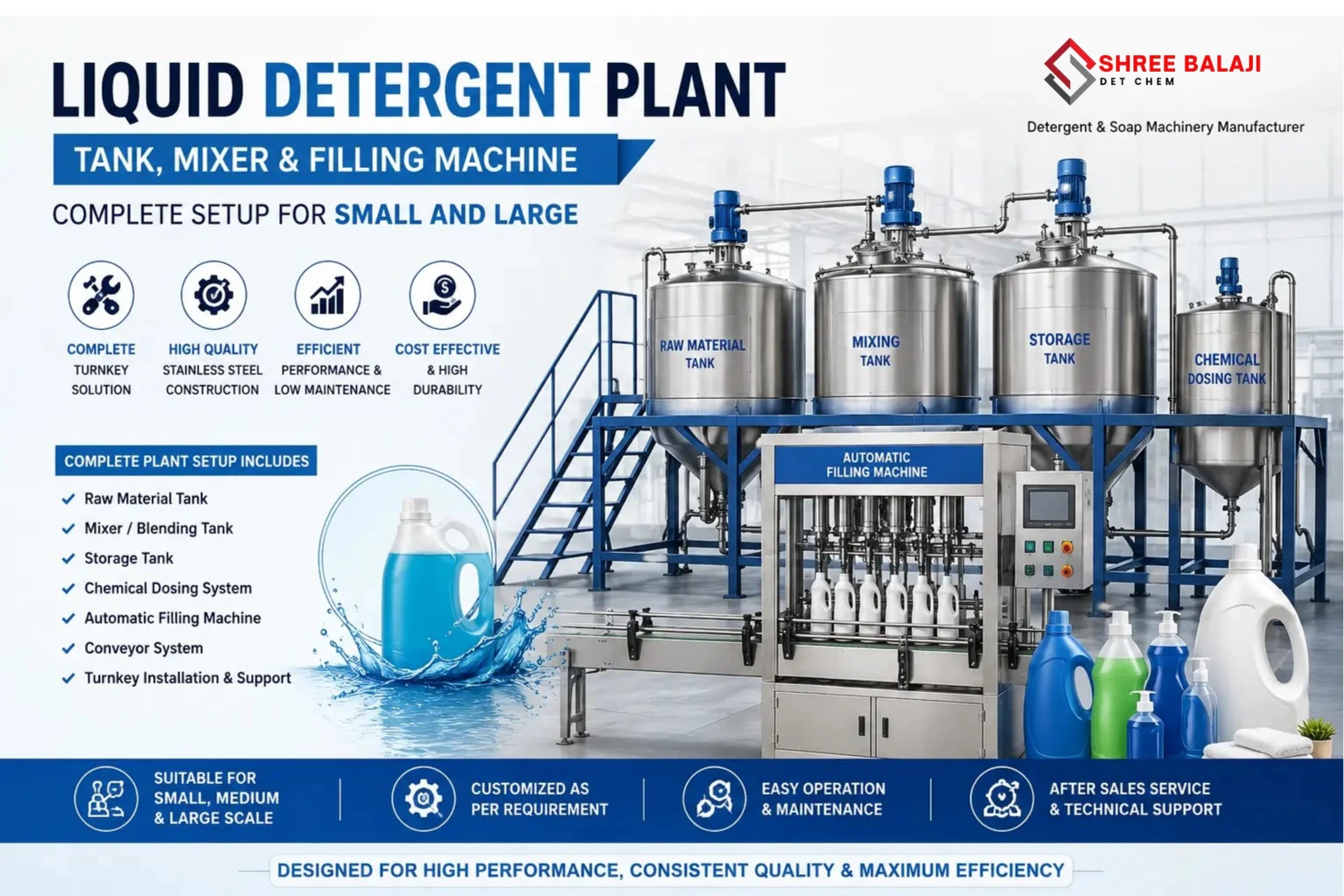
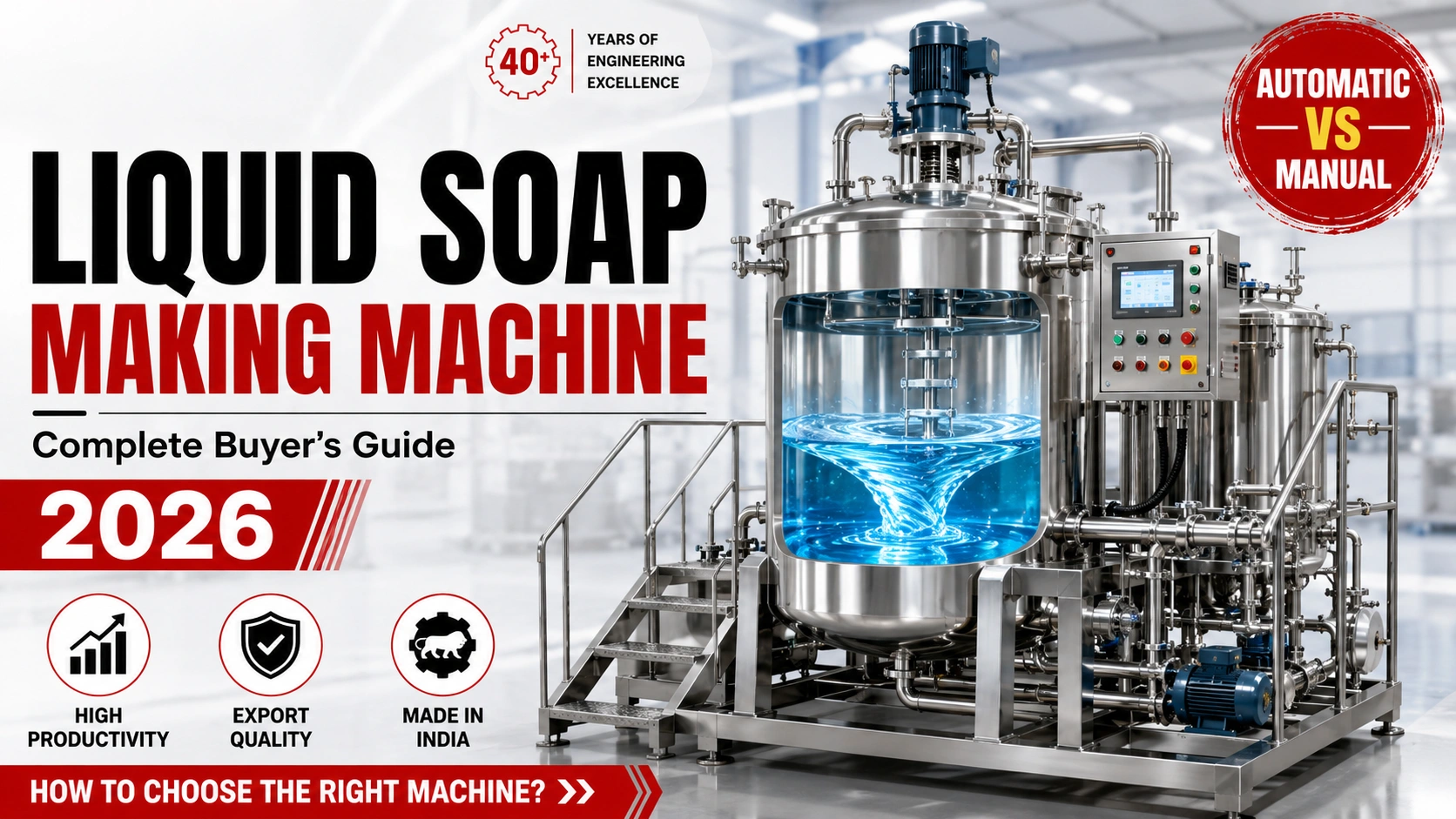
At its core, the machine handles three jobs: mixing raw materials into a stable formulation, heating the batch to the right temperature for that formulation, and dispensing the finished liquid soap into storage or packaging. Sounds simple. In practice, getting consistent viscosity and clarity batch after batch is where most of the engineering effort goes — and it’s also where cheaper, poorly built machines tend to fall apart after a few months of daily use.
The two big decisions you’ll make are automation level and batch capacity. Everything else — tank material, heating method, dispensing setup — gets configured around those two choices.
Automatic Liquid Soap Making Machine
The automatic version runs mixing, heating, and dispensing through PLC-based controls. Once you set the parameters for a formulation, the machine repeats them the same way every batch, which is the main reason mid-size and large manufacturers move to automatic setups — operator error stops being a variable in your output quality.
This matters more than it sounds. A manual machine run by three different operators across three shifts will produce three slightly different batches, even with the same recipe. An automatic machine won’t. For manufacturers supplying retail chains or export contracts with tight quality specs, that consistency isn’t optional.
The tradeoff is upfront cost. Automatic machines cost more to buy and need a trained technician for maintenance rather than general factory labour. For manufacturers running above a certain daily volume, the math still works out — labour savings and reduced wastage from failed batches pay back the difference over time. Below that volume, it often doesn’t.
Manual Liquid Soap Making Machine
The manual version keeps the same core mixing and heating function, but dosing, cycle timing, and dispensing depend on the operator. It costs less to buy, is simpler to maintain, and doesn’t require a technician on payroll.
This is usually the right starting point for new manufacturers testing the market, smaller regional producers, or anyone whose labour cost is low enough that automation doesn’t pay for itself yet. A lot of our clients — in India and abroad — start on a manual machine and upgrade to automatic once volume justifies it. That’s a normal, sensible path. There’s no real disadvantage to starting manual if your batch sizes don’t need the consistency automation buys you yet.
So Which One Do You Actually Need?
Ask yourself two questions: what’s your daily output target, and how many operators will run the machine across shifts?
If you’re under roughly 500-1000 litres/day with one operator per shift, manual usually makes more financial sense. Above that, especially with multiple shifts or multiple operators, automatic starts paying for itself faster than most people expect — usually within the first year, depending on your labour cost and batch failure rate on the manual line.
There isn’t a universally “better” option here. It’s a volume and labour math problem specific to your operation, and honestly, the right call changes as your business grows — which is exactly why so many manufacturers start manual and move to automatic later rather than trying to guess right on day one.
Manufacturing in India: What’s Different Here
Being based in Ahmedabad’s GIDC industrial belt shapes how we support Indian clients specifically. Spare parts don’t sit in a container for six weeks — they’re often available same-week. Site visits and installation support don’t need to be scheduled around an international trip. And because there’s no import duty or freight markup baked into the price, Indian manufacturers get better pricing than they would importing similar equipment from overseas.
We work with manufacturers setting up their first line in Gujarat, Maharashtra, Rajasthan, and other states, as well as established brands adding capacity to existing plants. The conversation is usually the same one: what’s your target output, what space do you have, and does it make sense to start manual or go straight to automatic given your growth plan.
Exporting to Nepal, Bangladesh, Africa, and the Middle East
Export buyers ask a lot of the same questions Indian buyers do, but a few things shift depending on the destination.
Nepal and Bangladesh: Most buyers here start with manual or semi-automatic machines and scale to automatic as their market grows — similar to the pattern we see domestically in India. We handle export documentation on our end, and machine sizing usually gets discussed against local market demand rather than a fixed formula.
Africa: Power supply reliability is the deciding factor more often than budget. Automatic lines depend on stable power in a way manual lines don’t, so we configure machines with that in mind for markets where grid consistency is a known issue.
Middle East and GCC: Buyers here tend to go straight to automatic, high-throughput lines, particularly for private-label soap and detergent production where contract volumes are set from day one and there’s less room to “start small and scale.”
None of this changes the core machine much — it changes what we recommend and how we configure it before it ships.
What to Ask a Machine Supplier Before You Buy
A few questions tend to separate a good decision from a costly one:
Is the supplier an actual manufacturer, or a trading company reselling someone else’s equipment? That matters for spare parts, service response time, and whether anyone can actually explain how the machine was built if something goes wrong.
What happens if a part fails eighteen months in? Ask this directly. The answer tells you more about long-term cost than the quote does.
Can they size the machine to your actual production target, or are they pushing a standard model regardless of what you need? A machine sized for 2000 litres/day sitting in a plant producing 400 litres/day is a bad use of capital either way — too big is as wrong as too small.
Getting Started
If you’re evaluating a liquid soap making machine — whether you’re setting up your first unit in India or sourcing equipment for export — the most useful next step is sharing your target daily output and current setup (if any). That’s enough for us to recommend whether manual or automatic fits, and what a realistic quote looks like.
Shree Balaji Detchem manufactures both configurations in-house and supports installation, commissioning, and after-sales service for clients across India and our export markets. Reach out with your requirements and we’ll walk you through the right fit rather than the most expensive option.
For technical specifications and pricing, contact Shree Balaji Detchem directly with your target production volume and location.
Product Overview
- Soap Making Machinery Solution
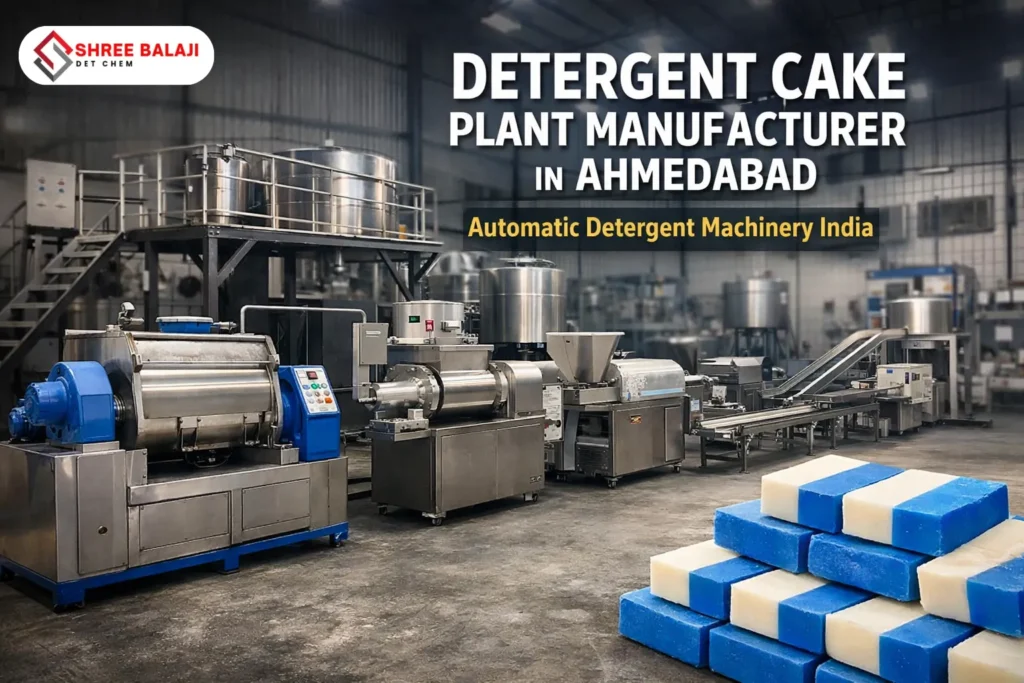
- Use: Detergent Cake , Toilet Soap Plant
- Industries: Soap & Detergent Manufacturer
- Budgets: ****