Laundry Soap Plant Manufacturer in India — Shree Balaji Detchem
- Home
- /
- Laundry Soap Plant Manufacturer in India — Shree Balaji Detchem
- By Shivholic
- sep 18, 2026
- no comments
Laundry Soap Plant Manufacturer in India — Shree Balaji Detchem
As a laundry soap plant manufacturer in India, Shree Balaji Detchem has seen most machinery pitches read the same — sigma mixer here, plodder there, “turnkey solution,” done. What they skip is the part that actually decides whether a plant makes money or bleeds it: the relationship between raw material quality, machine calibration, and the output you’re actually trying to hit. That’s the gap this machinery is built to close, and it’s worth walking through why.
Setting up a laundry soap manufacturing unit is a capital-heavy decision, and the machinery you choose decides whether that capital turns into consistent output or into a maintenance headache. Shree Balaji Detchem builds complete laundry soap plant machinery for manufacturers who need equipment that runs daily without breaking down — from the mixing stage right through to the finished, stamped soap cake.
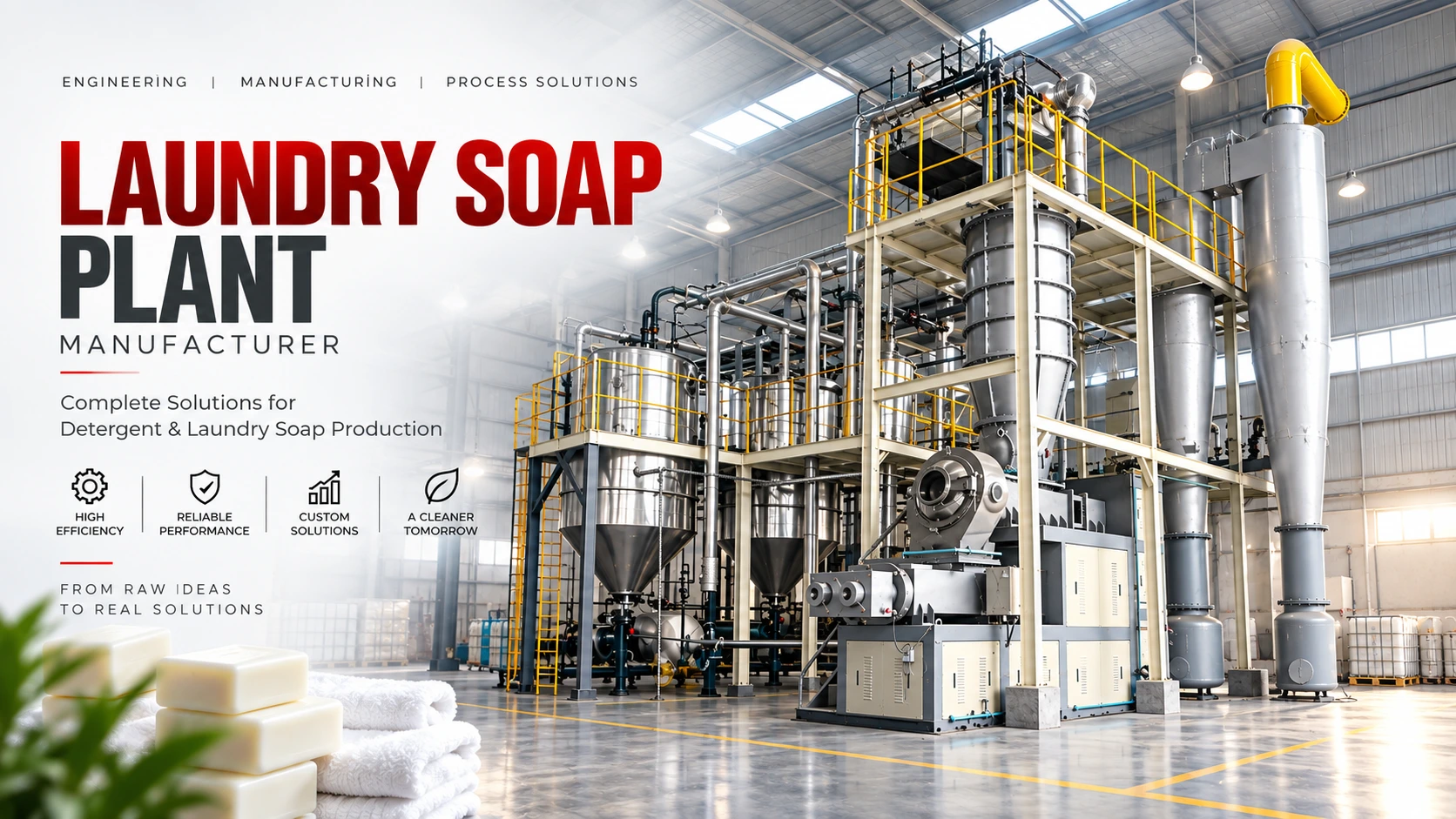
What a Complete Laundry Soap Plant Includes
A laundry soap manufacturing plant isn’t one machine, it’s a production line, and each stage feeds the next:
Sigma Mixer — blends the soap base, oils, and additives into a uniform mass before it moves to the next stage. Get this stage wrong and every downstream machine inherits the problem.
Triple Roll Mill — refines the soap mass, giving the final bar its smooth texture and consistency.
Duplex Vacuum Plodder — removes trapped air and extrudes the soap into a continuous, dense log, ready for cutting.
Cake Cutter and Stamping Machine — cuts the extruded log into bars and stamps them with the brand logo, weight, and finish.
Shree Balaji Detchem manufactures each of these individually or as a turnkey laundry soap plant, sized to the buyer’s output target — a 500 kg/day unit and a 5 ton/day unit need different motor ratings, different mixer capacities, and different plant layouts, and that sizing conversation happens before any quotation goes out.
Why Manufacturers Choose This Over Imported Machinery
Imported laundry soap plant machinery looks attractive on a spec sheet, but spare parts and service turnaround become the real cost once the plant is running. Shree Balaji Detchem’s machines are built and serviced out of Gujarat, which means faster part replacement, technicians who can visit the site, and pricing that doesn’t carry import duty on every spare.
This is also why the company’s laundry soap plant machinery has found steady demand across export markets — Nepal in particular, along with buyers exploring liquid soap and detergent powder lines alongside their laundry soap setup. A plant built for the Indian climate and power supply conditions tends to hold up better in similar markets abroad than machinery designed for European factory conditions.
Built for Small and Mid-Scale Manufacturers
Not every buyer is setting up a 10-ton-a-day factory. A large share of laundry soap plant inquiries come from manufacturers starting small — a family business moving from manual soap-making to a semi-automatic line, or an existing detergent powder unit adding laundry soap as a second product line. Shree Balaji Detchem’s machinery range covers both ends: standalone units for a small-scale laundry soap plant, and complete automatic lines for manufacturers scaling toward bulk, institutional, or export supply.
Quality and Service, Not Just a Sale
A soap plant machinery manufacturer earns repeat business on what happens after installation. Shree Balaji Detchem’s laundry soap plant machinery is backed by installation support and after-sales servicing, which matters more once wear parts on the plodder or mixer need attention six months into production. The company works with buyers on plant layout planning, machine selection by output capacity, and after-sales part supply — the three things that most affect whether a laundry soap plant machinery investment pays off in year one or drags into year three.
Get a Laundry Soap Plant Quotation
If you’re setting up a laundry soap manufacturing plant or expanding an existing detergent unit to include laundry soap, Shree Balaji Detchem can quote machinery by capacity — sigma mixer size, plodder output, and full-line packages for buyers in India and export markets including Nepal, Bangladesh, and the Middle East. Reach out with your target daily output and the current setup (if any), and get a machinery list and pricing suited to your plant.
FAQs — Laundry Soap Plant Manufacturer in India
1. What machines are needed for a complete laundry soap plant?
A complete laundry soap plant needs a sigma mixer for blending, a triple roll mill for refining, a duplex vacuum plodder for extrusion, and a cake cutter with stamping machine for finishing. Shree Balaji Detchem supplies these individually or as a full turnkey line.
2. How much does a laundry soap plant cost in India?
Cost depends on daily output capacity — a 500 kg/day setup and a 5-ton/day line use different motor ratings and mixer sizes, so pricing varies significantly by scale. Shree Balaji Detchem quotes based on the buyer’s target output and existing setup.
3. What is the minimum output capacity for a small-scale laundry soap plant?
Small-scale laundry soap plants typically start around 500 kg/day, suited to manufacturers moving from manual production to a semi-automatic line. Shree Balaji Detchem’s machinery range covers this starting point up through multi-ton automatic lines.
4. Why does the duplex vacuum plodder matter in laundry soap manufacturing?
The vacuum plodder removes trapped air from the soap mass before extrusion. Without proper vacuum extraction, bars come out porous, wear down faster, and lather inconsistently — a common quality issue buyers trace back to under-built plodder machinery.
5. Is Indian-made laundry soap plant machinery reliable for export markets like Nepal?
Yes — machinery built for Indian power supply and climate conditions tends to perform reliably in similar export markets, and being manufactured in Gujarat means faster spare part delivery without import duty delays, which matters for plants running in Nepal, Bangladesh, and other neighboring markets.
6. How long does installation and commissioning take for a laundry soap plant?
Installation timelines depend on plant size and site readiness, but Shree Balaji Detchem supports buyers through layout planning and commissioning as part of the machinery package, not as a separate afterthought.
7. What after-sales support is available once the plant is running?
Wear parts on the mixer or plodder typically need attention within six to twelve months of regular use. Shree Balaji Detchem provides after-installation servicing and spare parts support so this stays a routine maintenance stop, not lost production time.
8. Can existing detergent powder manufacturers add a laundry soap line?
Yes — this is one of the most common upgrade paths. Manufacturers already running a detergent powder unit can add laundry soap machinery as a second product line without rebuilding their existing setup from scratch.